Part I.
-Temporary Detention Centers-
1. Were the Japanese Americans given adequate care and accommodations as they were rounded up? Were they given assurances and clear information on what the future held for them?
No, because the Japanese Americans who obeyed the evacuation orders had to board trucks, buses, and trains and were transported to what was known as "Assembly Centers", in which many of them lived in horse stalls with unsanitary conditions or hastily constructed barracks. Also the toilet and bathing facilities were communal and devoid privacy. They were treated as if they were inmates, they had to stand in line for everything, including meals, latrines, supplies and services. But as prison life changed, the people helped organize specific services such as working in the camp offices, canteens, mess halls, hospitals, and schools. Through different places, they earned wages, and were paid eight to sixteen dollars per month for a forty-four hour week of work. But what i think is the worst of all was that the meals were nutritionally inadequate, and medical care was minimal. I think no one should be treated this way and I feel sincerity for the people who had to experience it all.
- Permanent WRA Camps -
2. Discuss the claim by the U.S. Government that the camps were for the protection of Japanese Americans. Were the barbed wire fences and guard towers meant to keep vigilantes out or Japanese American inmates in?
2. Discuss the claim by the U.S. Government that the camps were for the protection of Japanese Americans. Were the barbed wire fences and guard towers meant to keep vigilantes out or Japanese American inmates in?
By October 1942, the Japanese had got moved from fifteen temporary camps to permanent War Relocation Authority also known as WRA. They were camps under civilian control of the department of the Interior. The new camps were located in inland areas of vast, sandy deserts or swamp lands that were isolated. Some from relatively mild climates of the West, had experienced often dust storms, bitter cold winters, and sizzling summers for the first time. I think the barbed wire fences and guard towers were meant to keep Japanese American inmates in. The U.S. probably felt a somewhat scare of any Japanese people and decided to put them all somewhere separate, where they can be watched and they would not be able to leave, and used protecting them more as an excuse for such. However doing so would also somewhat protect the Japanese Americans, by avoiding any possible hate crimes being committed against them at the time.
- Camp Life -
3. Were the camps “resettlement communities,” or prisons? What’s the difference between the two?
3. Were the camps “resettlement communities,” or prisons? What’s the difference between the two?
The Japanese were told the camps would be more like resettlement communities but once they actually got there, they realized the camps were more of prisons. The camps were fenced with barbed wire and police, there were overcrowded in rooms with barely any furniture. As time continued, they found ways to get other necessities. They either fashioned them out of scrap lumber or by ordering from catalogs. Resettlement communities are simply what the name suggests them as, communities for people to resettle in. They would be comfortable, have descent living conditions, all the necessities of life and more than just cots and a pot- bellied stove. Unlike prisons which would be a holding area with little for criminals or people who have done a serious crimes, although the people in the camps had done know wrong.
4. Did the War Relocation Authority
take measures to protect family life and privacy?
Family life broke, everything encouraged children to spend time away from their family, and eventually parental authority diminished. Strong anger arose, from resentment of their confinement, along with the harsh conditions of camp life.The WRA really tried to provide recreational activities knowing the monotony of living in camps could cause violence among the discontent. Some of the Japanese were suspected of being collaborators and informers and were attacked. Demonstrations and riots had broken out by November and December 1942. Two unarmed youths and nine others were wounded by military police who were called in to quell the disturbance.
- Questions of Loyalty -
5. How did Japanese Americans respond after being incarcerated without due process of law, to questions asking them whether or not they were unquestioningly loyal to this country?
The Nisei, who were the second generation of U.S. born Japanese Americans were outraged. No other citizen's loyalty was ever questioned but the Nisei were asked to prove theirs again. They also knew if their parents chose "no" to answer both question, then if they chose "yes", it would show physical and emotional separation from them. The mandate to fill out the tricky questionnaire ended in dissension among camp inmates as the answers chosen by each person became a classification.5. How did Japanese Americans respond after being incarcerated without due process of law, to questions asking them whether or not they were unquestioningly loyal to this country?
- Tule Lake Segregation -
6. Were those who answered “no” to the loyalty questions clearly “disloyal” or were they voicing discontent with their treatment?
Some people answered "no" to both questions for personal reasons. But those people were branded as "disloyal", and were separated from the others and were sent to Tule Lake Segregation Center located in Northern California. I think the people were voicing discontent because they wouldnt have came to the country if they didn't want to be part of it, and it is suppose to be optional questions for people to fairly choose "yes" or "no" on their own, without being labeled.6. Were those who answered “no” to the loyalty questions clearly “disloyal” or were they voicing discontent with their treatment?
- Draft Resisters -
7. Why did these young men resist being drafted into the military? Write or improvise a conversation between two brothers in an internment camp who make two different opposing decisions on the draft: one enlists, the other resists. What are their points of agreement, if any? How do they differ? Is one brother more patriotic than the other ?
In January, the year 1944, the WRA reinstated the military draft to include the Japanese Americans. Part of the men resisted the draft because they felt that their constitutional rights and those of their family members had been disregarded in the confinement of them. 315 Nisei had refused to report for induction into the army until their constitutional rights were rightly reinstated, which landed 267 camp men convicted and sentenced three years in federal penitentiaries. The scene is two brothers engaging in conversation explaining their decisions on joining the armed forces. In which Brother one is older and decides to enlists, and Brother two is resisting. Brother one: "Little brother, I am joining the military." Brother two: "No big brother, you should resist, the same people asking you to fight are the ones imprisoning your family." Brother one: "The draft was reinstated to include Japanese Americans like us, plus this great country is the only country we can be in and that takes us as citizens." Brother two: "No matter what you say, I will resist joining the Americans, even if its the only country can be citizens in." The brothers do agree on certain points such as America still taking them as citizens. They differ with views on fighting for America who is responsible for them being in the camps taking away their rights. Brother one is more patriotic than Brother one. This is because Brother one is willing to risk his life fighting for the country of America which he calls great even though it has imprisoned his people wrongly.7. Why did these young men resist being drafted into the military? Write or improvise a conversation between two brothers in an internment camp who make two different opposing decisions on the draft: one enlists, the other resists. What are their points of agreement, if any? How do they differ? Is one brother more patriotic than the other ?
- Military Service -
8. What did it take to fight for a country that kept your family interned behind barbed wire?
A relatively large amount of people volunteered because of their desire to prove their loyalty and to respond to the urgings of the Army and the Japanese American Citizens League or the JACL. Thousands of volunteers served in the 442nd Regimental Combat Team or RCT. Several also served as translators and interpreters in the Military Intelligence Service or MIS. Women also got to serve in the Women's auxiliary corps or WAC8. What did it take to fight for a country that kept your family interned behind barbed wire?
Part II.
1. How do we prevent the injustice
of internment from happening again? Perhaps it
starts with learning about this historic mistake, as well as working to
eliminate the causes for continuing racial prejudice today.
starts with learning about this historic mistake, as well as working to
eliminate the causes for continuing racial prejudice today.
We need to prevent the injustice of internment or anything else happen again. To do this it would help if people were more considerate and caring for others. We should ensure everyone is treated equally fair. And people should get what they deserve and there should be consequences only for wrong actions.
2. What do you think? What is your
responsibility? What can you do as one individual? Your voice and actions can be an important part not only
of preventing the gross injustice of internment from
happening again, but also preventing the other negative
effects of racial hatred and prejudice.
I think no one should be treated unfairly. No one race should be singled out for anything. My responsibility is to be just, fair, and considerate of others. I should stand up for what is right and take action rather than watch and comment on a problem.
Part III.
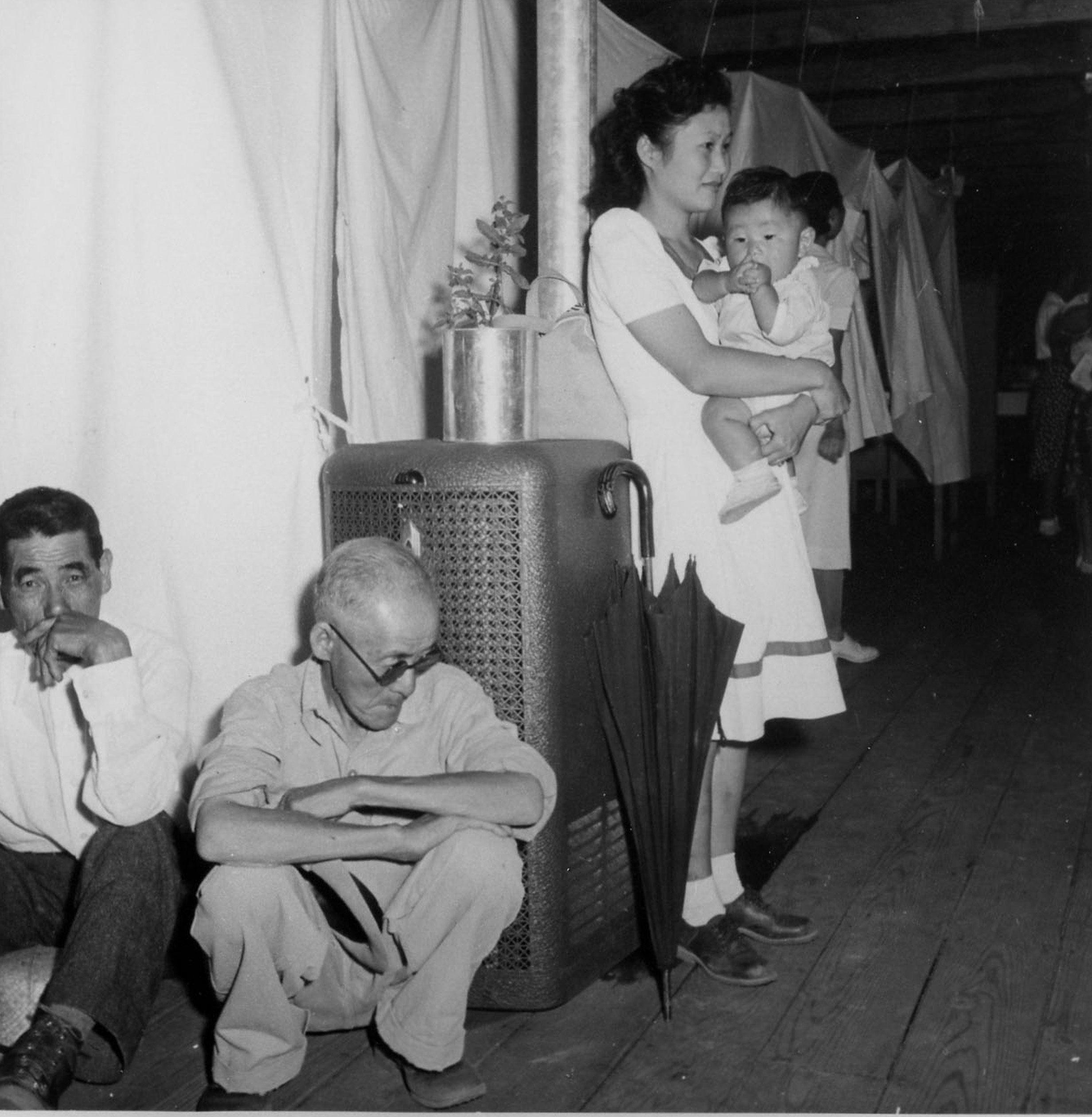
Woman stands with baby by a stove inside a barrack, Manzanar
Inside a Barrack
Photogropher: Dorothea Lange
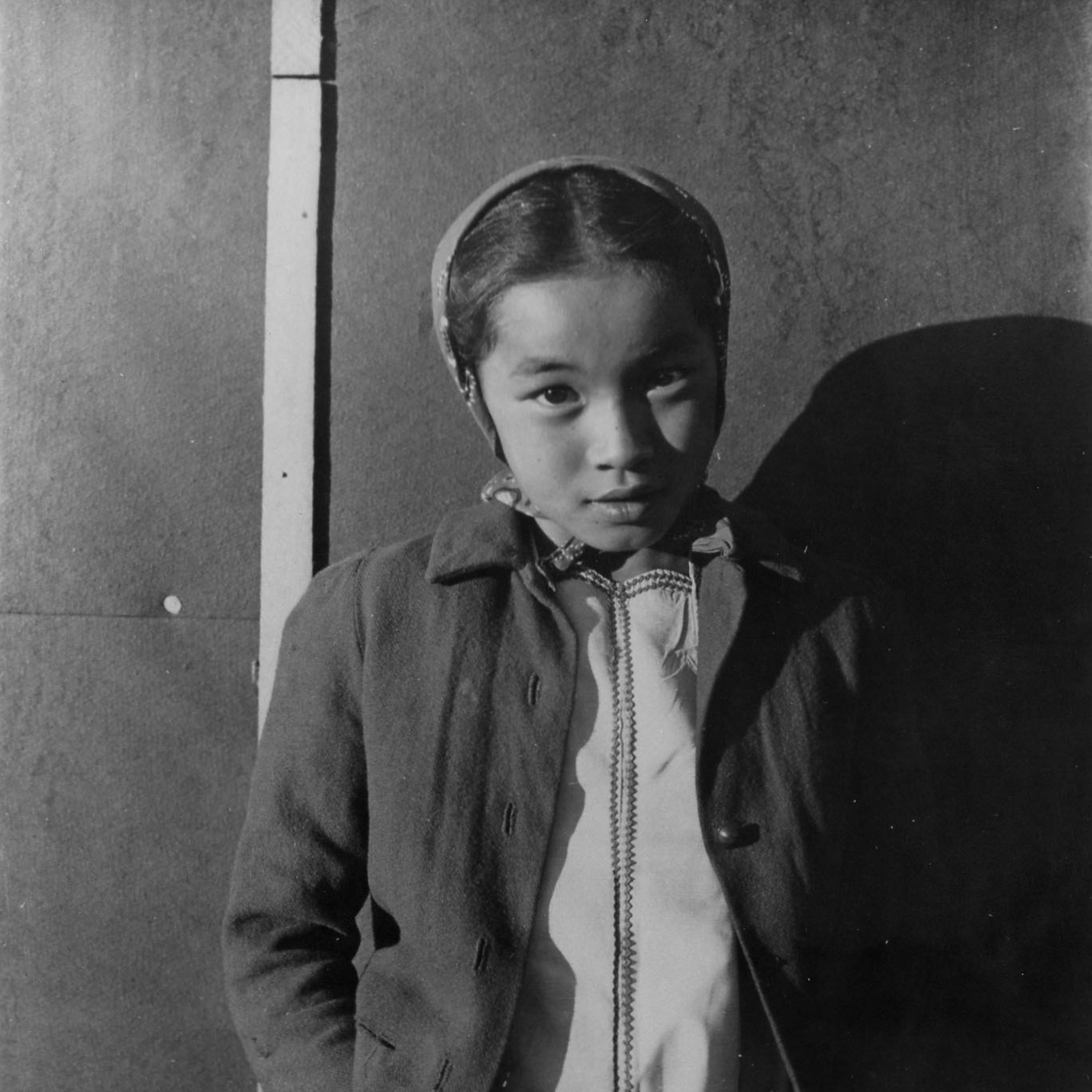
Girl in a coat and headscarf looks into the camera, Manzanar
Photographer: Dorothea Lange

Catholic Church
Photographer: Ansel Adams

Construction of barracks at
Manzanar in Owens Valley, flanked by the High Sierra and Mt. Whitney
Photographer: Owens valley, National archives

Warehouse. M. Ogi, Manager. S. Sugimoto, Manager of CO-OP Bunkochi Hyashi.
Photographer: Ansel Adams
Japanese Internment Research Project by: AdeBunmi Adeyemo, Ms. Wyatt's third block

Part I number 2- I also think the barbed wire and gaurds were to keep the inmates in. The U.S. gov't was scared of the Japanese and the threat of a domestic threat. So, to prevent that from happening the imprisoned all of them.
ReplyDeletePart 1 #2
ReplyDeleteI agree that the barbed wire and guards kept the inmates in. It was used like a protective barrier.